
 IT
 EN
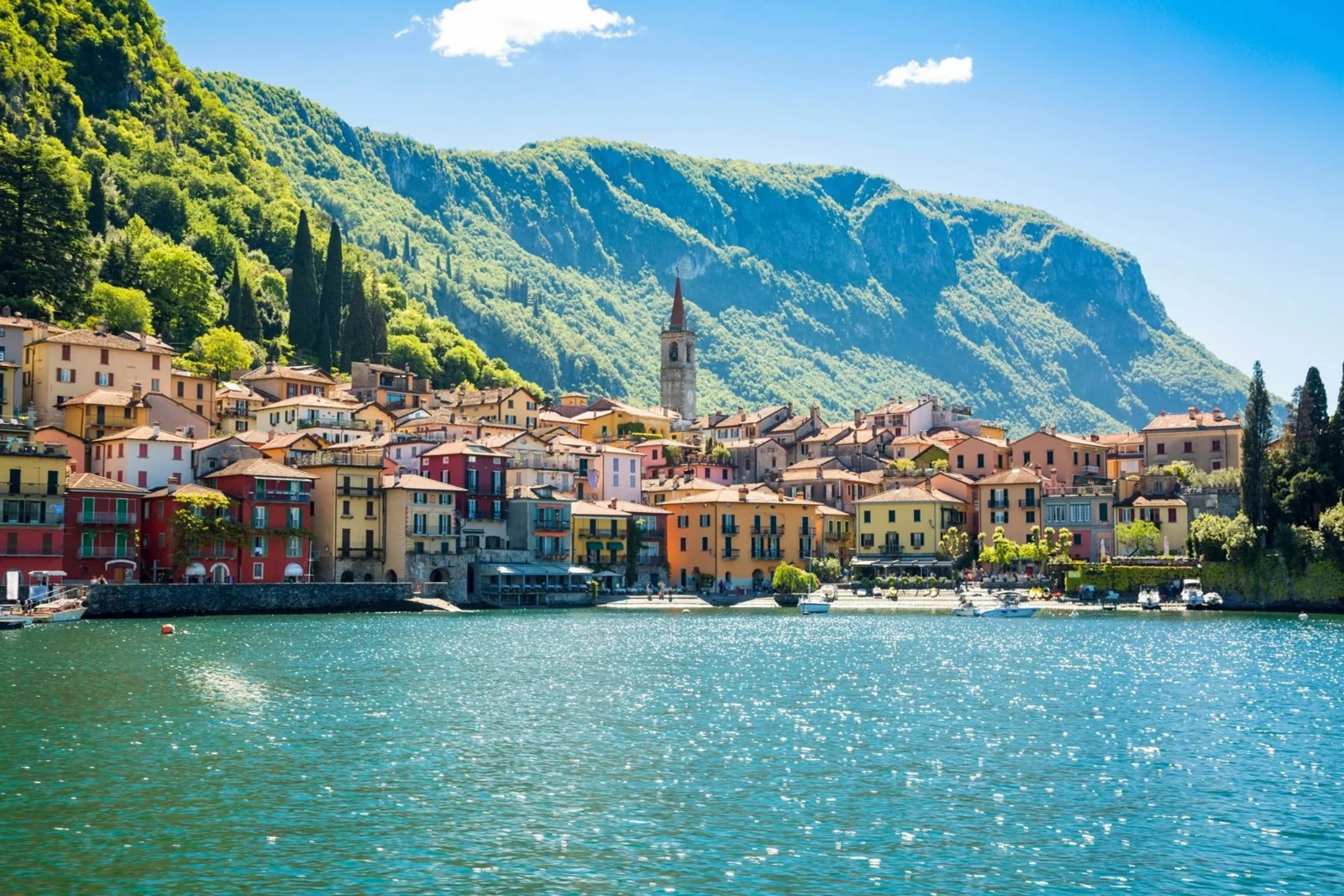
Some people arrive in Italy on holiday and, almost without noticing, begin to imagine a different life. Others see a stone farmhouse surrounded by olive trees as the place where they might spend their retirement. Some fall in love with a terrace overlooking the sea, the silence of an old village or the light that illuminates a city’s façades at sunset. Others, setting the poetry of the landscape aside, look to Milan, its international connections and the opportunities of a European metropolis.
Languages, countries of origin and financial means differ. So do the reasons for looking for a home. Yet each of these choices contains something profoundly Italian: the opportunity to inhabit not just a place, but a way of life.
This helps explain why Italy continues to hold a particular attraction for international property buyers. Its architectural heritage, varied landscapes, rich traditions and diverse regions can meet very different needs. Some seek a second home, others wish to move permanently, some want to be closer to their family, and others see the purchase as an investment to retain over time.
But who are the international buyers looking for homes in Italy? Which countries do they come from, and which areas attract their attention?
To answer these questions, we need to look beyond postcards and dreamlike images. The international housing market reveals an Italy of large cities and small towns, historic residences and contemporary apartments, famous coastlines and countryside still far from the most visited destinations.
Americans pursue a dream; Germans seek a home they can reach easily
The United States is one of the main sources of international demand for Italian property. For many Americans, buying a home here makes a longstanding connection tangible: a love of Italian culture, the memory of a journey, sometimes a family history, or a wish to begin a new chapter in life.
A survey published by Gate-away.com in July 2025 attributed around 31% of the prospective international buyers included in its analysis to the United States.
The research also examined their stated motivations: 46.3% cited retirement, 30.8% a desire for a change of life, 16% holidays and 6.3% investment.
These figures describe demand driven by personal aspirations and long-term plans. It is important, however, to clarify that they concern enquiries and intentions recorded by the portal, rather than the overall distribution of completed property transactions in Italy.
Alongside Americans, European buyers form a significant presence, particularly Germans and French nationals. Here, the appeal of the location is accompanied by practical considerations: geographical proximity, ease of travel, familiarity with the country and the opportunity to return several times a year.
Further evidence comes from idealista. In the fourth quarter of 2025, according to the portal’s analysis, 12.7% of views of property listings for sale came from abroad. Among international users, Germany accounted for 16.3%, the United States for 11.2% and France for 7%.
Again, these figures measure online interest, rather than the number of completed purchases. They nevertheless help explain the origins of a substantial share of international attention towards Italian residential property.
The picture that emerges is a market shaped by two complementary desires: discovering somewhere new that can surprise, and finding a familiar, accessible destination suitable for a second home.
Tuscany, Sicily and Lombardy: three faces of an appealing Italy
The preferences expressed by international users reveal a geography of interest spanning the peninsula and very different images of our country.
According to figures published by idealista on 28 August 2026, concerning preferences recorded on its portal, Tuscany ranked first with 14.33%. It was followed by Sicily at 11.05%, Lombardy at 9.28%, Puglia at 8.74% and Liguria at 7.70%.
These percentages do not represent regional shares of completed purchases by foreign nationals. They describe the preferences recorded in the analysis and should be interpreted as indicators of online interest.
They are nevertheless meaningful: they show how difficult it is to reduce the Italy sought by people from abroad to a single image.
Tuscany attracts through its landscapes and the history of its villages. Sicily offers the sea, light and layers of culture that have shaped its identity. Lombardy combines Milan’s energy with the tranquillity of the great lakes nearby. Puglia and Liguria, with their coastlines and historic centres, offer a different balance between beauty, everyday life and the desire for escape.
Five regions, then, but above all five ways of imagining a home.
Tuscany: the privilege of living within a landscape
Some places seem made to be remembered. Tuscany is one of them.
Hills covered in vineyards, stone farmhouses, rows of cypress trees, medieval villages and cities of art form a landscape that has become one of Italy’s most recognisable expressions in the international imagination.
Buying a property here may mean preparing for retirement, planning a future move or finding a home in which to spend extended periods away from one’s own country.
The appeal is not limited to the most famous destinations. Alongside Florence and established international tourism locations, lesser-known towns can also attract considerable interest, particularly in the luxury property segment.
San Miniato, in the province of Pisa, is an example. In idealista’s analysis of luxury villas, published in February 2025, 82.9% of searches for this property type came from abroad. Americans were the largest group, followed by Germans and Dutch buyers.
The figure concerns searches on the portal for a specific market segment, rather than the town’s entire residential property stock. It nevertheless provides an interesting indication of how somewhere outside the most visited destinations can attract international interest.
A home in Tuscany can mean more than the sum of its rooms. What matters is the view from the window, the landscape accompanying each day and the distance from the hectic pace of big cities. Above all, it is the feeling of belonging to a place that retains its identity.
Sicily: beauty as an invitation to change one’s life
Sicily occupies a prominent position among the destinations sought by international buyers. Its appeal extends beyond beaches and famous resorts to cities of art, inland villages, coastal towns and areas where the property available varies greatly from one location to another.
Noto and Syracuse, with their architecture, history and proximity to the sea, are two examples of this attraction. Elsewhere, buyers may seek a house to restore, an apartment in a historic centre or a home to enjoy for several months each year.
Not everyone wants an exclusive villa or a waterfront terrace. For many, Sicily offers the possibility of a different pace of life, away from big cities and with a closer relationship to the local area.
Its appeal alone is not enough, of course. Before buying, it is necessary to consider transport connections, services, maintenance expenses and the overall cost of managing the property. A home may win someone over at first sight; to become a happy choice, however, it must suit the life they wish to lead.
It is in this meeting between imagination and reality that the property dream takes a concrete form.
Lombardy: Milan for opportunities, the lake for beauty
Lombardy offers an unusual combination: an international metropolis on one side and some of Europe’s most celebrated lake landscapes on the other.
Milan attracts those seeking a professional base, services, transport connections and an economic environment linked to Europe’s major centres. Lake Como responds to a different desire, centred on prestigious villas, second homes, scenery and privacy.
These are two markets coexisting in the same region but reflecting different needs.
Buyers in Milan may be guided by proximity to work, schools, infrastructure and services. Those choosing the lake may prioritise the views, tranquillity and the pleasure of living somewhere the landscape becomes part of daily life.
The high-end villa segment confirms international interest in certain lakeside locations. idealista’s analysis published in February 2025 included Carate Urio, Menaggio, Griante and Laglio among the towns with a high proportion of searches originating abroad.
In Lombardy, a home can therefore be a means of building an international career or a retreat from the speed of the world, at least for a while.
Puglia and Liguria: the sea, villages and the desire to stay
The sea continues to have a particular power of attraction. This is not only about enjoying holidays, but also about imagining a different everyday life, with a slower rhythm and a closer relationship to the local area.
Puglia, with its coastlines, traditional homes and historic centres, offers many possibilities. Ostuni, Carovigno and Ceglie Messapica, alongside other locations in the region, are among the destinations sought by international buyers.
The choice may be an apartment in a village, a country home or a property to restore. In each case, beauty should be accompanied by a practical assessment: distance from airports, availability of services, maintenance requirements and running costs can make the difference between a desirable purchase and a sustainable one.
Liguria offers a particular balance between the sea, historic villages, marinas and connections to other European countries. For those seeking a second home that is easy to reach, proximity to France, Switzerland and Northern European markets can be an important advantage.
In both regions, international demand appears to address an essential question: not simply where to spend holidays, but where it is possible to return, stay and feel at home.
A new geography of desire: smaller towns enter the picture
For a long time, accounts of Italy as a destination for foreign homebuyers were dominated by a few images: Florence, Rome, Venice, villas on Lake Como and the Tuscan countryside.
Today, the geography of preferences appears more varied.
In its report published in August 2026, idealista noted interest in places such as Tropea, Sanremo, Lucca and Syracuse, as well as less familiar towns including Tortora in Calabria, Castiglione del Lago in Umbria, Fivizzano in Tuscany and Nizza Monferrato in Piedmont.
These places differ in their history, landscapes, size and property markets. What may unite them is the possibility of finding a home somewhere less congested, forming a more direct relationship with the area or buying a property with features difficult to find in large cities.
This trend suggests international demand is less uniform than one might imagine. Not everyone is looking for famous monuments, renowned restaurants or established tourism destinations. Some seek tranquillity; others are drawn to traditional architecture, village life or the chance to restore a property with a history.
A clarification is necessary, however: a location searched for frequently online is not necessarily the place where foreign buyers complete the most purchases. Measuring actual purchases requires transaction data, distinct from listing views and enquiries sent to portals.
The difference is substantial. Interest describes what attracts; transactions show what is ultimately chosen.
Retirement, holidays, work or investment: the reasons behind a purchase
Behind every property search lies a personal story. The reason someone starts looking for a home is not always the one that eventually leads to signing.
For some, Italy is a place to spend their retirement. This does not necessarily mean moving permanently: sometimes the idea is simply to live here for a few months each year, alternating countries and seasons.
For others, buying a home is the first step towards a more profound change: a new family life, a professional project or a desire to leave an environment that has become too hectic.
Some seek a second home for holidays, wishing to return each year to the same view, the same places and a familiarity that no occasional booking can provide.
In large cities, professional needs may take priority. Milan, Rome and other urban centres offer work opportunities, services and transport connections that can make buying a home worthwhile.
Finally, there is investment. Here, the beauty of the location is accompanied by an economic assessment: potential appreciation, rental opportunities, taxation, running costs and local market conditions.
These motivations are not necessarily alternatives. A home initially bought for holidays may become a main residence years later. An investment may turn into a family project. A journey begun out of curiosity may end with a decision that changes someone’s life.
This is perhaps one of the most interesting aspects of the phenomenon: a home is not merely an asset to purchase, but a project that can evolve alongside its owner.
Foreign homebuyers in Italy do not necessarily live abroad
An important distinction is often overlooked when discussing foreign buyers: not everyone comes from abroad to purchase.
A foreign national may have lived in Italy for years for professional, family or personal reasons. They may already reside here, or may buy from abroad without moving immediately.
These situations are not equivalent, either statistically or legally.
Understanding the market therefore requires distinguishing between the buyer’s nationality, their place of residence and the reasons for investing in Italian property. When moving from market analysis to the practical possibility of buying, their legal status also becomes essential.
Asking where foreign buyers wish to purchase a home is one thing. Establishing whether they can proceed in a specific case, and under what conditions, is another.
Can a foreign national buy a home in Italy? It depends on the circumstances
Foreign citizenship does not, in itself, create a general prohibition on buying property in Italy. The legal process is not identical for everyone, however, and requires identifying the rules applicable to the specific situation.
The framework for European Union citizens differs from that applicable to nationals of third countries. For the latter, too, it is impossible to give an answer that applies indiscriminately to every situation.
Before the deed is signed, the question should not simply be: “Which country does the buyer come from?”
It is also necessary to understand their personal status, where they reside, whether they hold a relevant residence permit and whether special provisions or international agreements apply to the transaction.
A passport identifies citizenship. On its own, it does not complete the legal assessment required to purchase a property.
Reciprocity: what it means and when it must be checked
Article 16 of the preliminary provisions to the Italian Civil Code establishes, as a general principle, that foreign nationals may enjoy the civil rights granted to Italian citizens subject to reciprocity, without prejudice to provisions contained in special laws. The rule expressly extends this criterion to foreign legal entities.
In practical terms, where reciprocity is required, it is necessary to determine whether the law of the buyer’s country grants Italian citizens an equivalent or sufficiently similar right to the one the buyer intends to exercise in Italy.
It is not enough to know that a country generally allows foreigners to buy property. Restrictions may concern the type of property, its location, its intended use or the need to obtain prior authorisation.
The assessment must concern the rules actually applicable, also taking account of international agreements and any statutory exceptions.
The question is therefore not whether a particular nationality can buy a home in Italy in the abstract, but which legal framework applies to the specific buyer and transaction.
Lawful residence can change the legal framework
For third-country nationals lawfully residing in Italy, the applicable rules can significantly affect the need to check reciprocity.
Article 2, paragraph 2, of Legislative Decree No. 286 of 1998 grants lawfully resident foreign nationals the civil rights attributed to Italian citizens, except where otherwise provided by the consolidated legislation and international agreements in force for Italy.
Applying this provision nevertheless requires a concrete examination of the buyer’s status, residence permit and relevant rules. It is not prudent to turn a general rule into an automatic conclusion applying regardless of circumstances.
In practice, it is therefore essential to document the buyer’s personal status correctly before the deed is signed.
Simply holding an Italian tax code, for example, does not in itself establish the conditions for a possible exemption. The overall legal situation, properly assessed, determines the appropriate process.
When foreign law imposes restrictions
Some legal systems place particular conditions on foreign property purchases. Restrictions may concern the type of property, its location, its intended use or the need for specific authorisations.
A generic answer can be misleading in these cases. The applicable provisions must be identified, and it must be established whether and to what extent they matter for reciprocity.
The same care is required when the buyer is a company or another entity established abroad. In addition to reciprocity, checks may be needed regarding the entity’s existence, corporate documents and the authority of those acting on its behalf.
Prudence here does not mean assuming that the purchase is impossible. It means not considering it automatically permitted before the required conditions have been established.
When reciprocity is absent, the issue is more than a formality
Where reciprocity is necessary, its absence can significantly affect the validity and legal security of the transaction.
It is therefore not a detail to postpone until after signing, or a formality to address only once the price has been agreed. The assessment must take place before the deed, using reliable sources and considering the specific circumstances.
The notary’s preventive role is particularly important in this process. Identifying possible obstacles in good time allows the parties to understand the transaction’s legal framework before taking on definitive commitments.
A property transaction’s security does not depend solely on agreement over the price or the completeness of the property documents. It also depends on identifying the applicable rules correctly and establishing the conditions enabling the buyer to become the owner.
Buying a home and obtaining tax relief are separate questions
Another misunderstanding must be avoided: being entitled to purchase property does not automatically mean qualifying for tax relief on the transaction.
The legal possibility of purchasing and the tax treatment of the transaction are separate matters. To establish whether benefits such as first-home relief are available, the requirements of tax law and the buyer’s personal circumstances must be checked separately.
Citizenship is not the only relevant factor here either. What matters are the statutory conditions for the specific benefit, including, where required, residence and other tax-related requirements.
A preliminary assessment helps prevent two distinct questions from being confused and the buyer’s expectations from resting on conditions not yet established.
Before the deed, preparation makes the difference
Italy continues to attract international buyers because it offers possibilities that cannot easily be reduced to one housing model: a home in central Milan, a lakeside villa, a farmhouse in the countryside, a seaside home or a property in a village waiting to be rediscovered.
There is no single international buyer, just as there is no single reason for choosing our country. People have different histories, goals and resources, but share a decision to invest in a place they consider special for different reasons.
Between falling in love with a home and becoming its owner, however, lies a step that must not be overlooked: establishing that the purchase is legally possible and that all required conditions are satisfied.
For those buying from abroad, preparing the deed may require additional checks beyond the usual ones. Addressing them in good time reduces uncertainty, prevents delays and protects everyone involved.
This work takes nothing away from the appeal of the choice. On the contrary, it gives that choice solid foundations.
Buying a home means imagining a life within those walls: mornings beside a window, summers by the sea, the silence of the countryside or the movement of a city. It means choosing somewhere to feel a sense of belonging, or somewhere to begin becoming someone different.
For that project to become reality, however, desire must meet knowledge, and enthusiasm must be accompanied by an understanding of one’s rights and obligations.
A home can win your heart in an instant. Becoming its owner, however, requires every step to be taken with the necessary legal security. The best time to check is before signing.
Maria Ippoliti – ClouCasa®
Sources and methodology — Figures concerning international property demand come from analyses published by Gate-away.com and idealista. Depending on the case, the percentages cited refer to enquiries received and preferences or views recorded on those platforms. They are therefore indicators of international buyers’ interest in Italian property and do not necessarily coincide with the number of completed transactions. The data should be interpreted taking account of the reference period, sample and methodology adopted by each portal.